


Popular Search
Fast-Track To The Frontlines: A Nurse Educator's Guide To 6-Month Healthcare Courses

Whenever a prospective student walks into my office and asks how to become a nurse in six months, I always start with a gentle but necessary reality check: you cannot earn a Registered Nurse ($\text{RN}$) license or a Bachelor of Science in Nursing ($\text{BSN}$) in half a year. Those highly advanced clinical degrees require deep physiological training, intensive drug-interaction pharmacology, and thousands of supervised clinical hours.
I have spent more than 15 years working in hospitals and teaching in classrooms, and if there is one thing I know for certain, it is this: our healthcare system cannot function without entry-level clinical staff.
Many people believe that the only way to touch a patient's life or work in a hospital is by committing to a four-year university degree and taking on thousands of dollars of student debt. But that is simply not true.
If you want to enter the medical field quickly, start earning a stable income, and find out if hands-on caregiving is your true calling, a six-month nursing program is one of the smartest career moves you can make. Let us look at how these accelerated programs work, what your daily life will look like, and how you can use this short-term training as a launching pad to a lifelong career.
1. What a Six-Month Nursing Program Actually Is
First, we need to clear up a very common point of confusion. A six-month program will not make you a Registered Nurse (RN) or allow you to administer complex intravenous medications. Those roles require associate or bachelor degrees.
Instead, a six-month nursing course prepares you for vital clinical roles that provide direct, hands-on patient care under the supervision of RNs. Depending on the school you choose, your program will typically train you for one of three key certifications:
-
Certified Nursing Assistant (CNA): This is the heart of daily patient care. You will learn how to take vital signs, assist patients with mobility, dressing, and meals, and monitor their physical and emotional condition.
-
Patient Care Technician (PCT): This is an advanced CNA role, highly favored by major hospitals. In addition to basic care, you will be trained in specialized skills like drawing blood (phlebotomy) and performing electrocardiograms (ECGs).
-
Certified Medical Assistant (CMA): This role splits your time between clinical duties, like preparing patients for exams, and administrative tasks, like managing medical records in a doctor's office.
2. What to Expect During Your Six Months of Training
An accelerated program compresses a massive amount of practical knowledge into a very short window of time. It is intense, fast-paced, and highly rewarding. Your schedule will be divided into two main phases:
Phase One: The Classroom and Lab (Months 1 to 3)
During the first half of your course, you will spend your time in classrooms and simulation labs. You will learn the foundational science of healthcare, including:
-
Infection control and sterile procedures.
-
Anatomy and physiology basics.
-
Medical terminology and documentation.
-
Patient safety, ethical care, and communication skills.
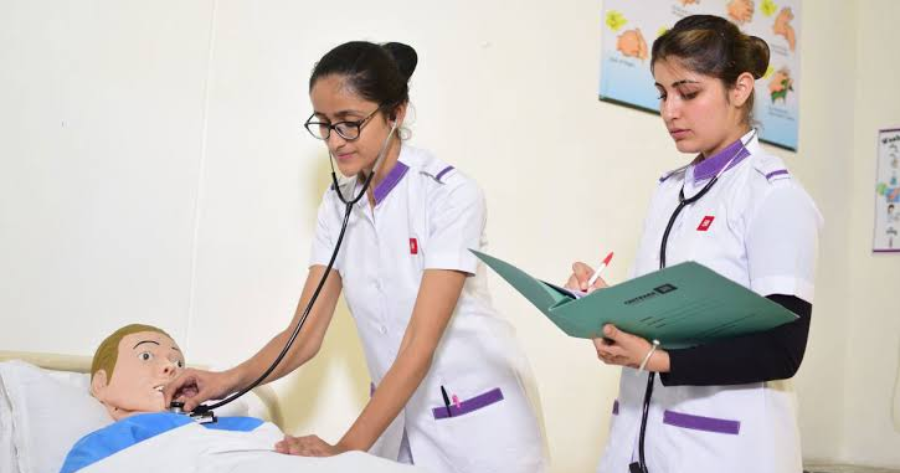
In the lab, you will practice clinical skills on medical mannequins and your classmates. You will practice taking blood pressures, safely transferring patients from beds to wheelchairs, and setting up medical equipment until the movements become second nature.
Phase Two: Clinical Rotations (Months 4 to 6)
This is where the real magic happens. Under the direct supervision of your clinical instructor, you will step out of the classroom and into local nursing facilities, rehabilitation centers, or community hospitals.
You will work real shifts, interact with actual patients, and experience the fast pace of a modern medical floor. Clinical rotations are where your book knowledge transforms into true professional confidence.
3. Admission Requirements and How to Prepare
Because these courses are highly condensed, schools want to ensure their students are prepared to succeed from day one. Fortunately, the barriers to entry are much lower than traditional college programs:
-
The Basics: You must be at least 18 years old and hold a high school diploma or a General Educational Development (GED) certificate.
-
Health and Safety: Because you will be working with vulnerable populations, you must pass a criminal background check, a standard drug screening, and prove that your immunizations are up to date.
-
Physical Preparation: Nursing is a highly physical profession. You should be comfortable standing on your feet for several hours and be physically capable of safely lifting or transferring up to 50 pounds.
4. Realistic Job Opportunities and 2026 Earnings
Once you pass your state certification exam at the end of your six months, you will find yourself in high demand. Healthcare facilities across the country are facing critical staffing shortages, and they are actively recruiting certified graduates.
Here is a realistic look at the entry-level career paths and typical compensation you can expect in the current 2026 job market:
-
Certified Nursing Assistant (CNA): CNAs typically earn between 19 and 24 dollars per hour, with high-demand states like California, New York, and Oregon offering up to 28 dollars per hour. You will find excellent job security in nursing homes, assisted living facilities, and home health agencies.
-
Patient Care Technician (PCT): Because of their specialized training in blood draws and ECGs, PCTs are highly sought after by emergency rooms and acute care hospitals. Average wages range from 21 to 27 dollars per hour.
-
Home Health Aide (HHA): If you prefer a calmer, one-on-one environment, working as a home health aide allows you to care for seniors in their own homes. Wages generally range from 17 to 22 dollars per hour, with incredible schedule flexibility.
5. The Ultimate Stepping-Stone Strategy
For many of my students, a six-month course is not the final destination—it is a strategic stepping stone. I highly recommend using what I call the Employer-Funded Career Hack:
-
Graduate and Get Hired: Complete your six-month program and secure a job at a major local hospital as a Patient Care Technician or CNA.
-
Earn While You Learn: Spend a year working, gaining invaluable clinical experience, building relationships with doctors and nurses, and earning a steady paycheck.
-
Let the Hospital Pay for Your RN: Almost every major hospital system offers tuition reimbursement programs for their employees. Once you have proven your worth, you can apply for an Associate Degree in Nursing (ADN) program, and your employer will often pay for a massive portion of your tuition while you continue to work flexible, part-time shifts.
By using this strategy, you can graduate as a fully licensed Registered Nurse with years of real hospital experience and virtually zero student debt.
6. Is a Six-Month Nursing Course Right for You?
Before you enroll, it is important to be completely honest with yourself about the challenges of this path.
The pace of an accelerated program is demanding. You will need to dedicate significant evenings and weekends to studying, and balancing these hours with a full-time job or family responsibilities requires exceptional time management.
Additionally, healthcare is an emotionally demanding field. You will encounter patients who are in pain, confused, or frightened. It requires immense patience, empathy, and resilience.
But if you have a big heart, a strong work ethic, and a desire to make a tangible difference in people's lives immediately, those six months of hard work will open the door to one of the most stable, rewarding, and respected careers in the world.
Sources & Reference Material
-
The American Association of Colleges of Nursing (AACN): National guidelines on academic pathways, career ladders, and nursing workforce development.
-
The U.S. Bureau of Labor Statistics (BLS): Occupational outlook databases and regional wage reports for CNAs, medical assistants, and home health aides.
-
The National Council of State Boards of Nursing (NCSBN): Certification requirements, state registry standards, and clinical exam protocols.
Educational Disclaimer
The training duration, clinical hour requirements, and state certification exams for entry-level nursing programs vary significantly by local jurisdiction and state board regulations. The hourly wages and employment metrics cited represent analyzed market averages for early 2026 and do not guarantee future earnings. Before enrolling or paying tuition, it is highly recommended that you verify that your chosen vocational school or community college is fully accredited by your state's Board of Nursing and is approved to prepare students for the relevant state licensing examinations.





Most Read

How To Generate Gugu Gaga Penguin AI Art For Free

How Rare Is Your Real Name? The Ultimate Beginner’s Guide To Check Name Uniqueness

Explore No-Deposit Rental Options For Tenants In 2026

How To Create And Customize Roblox Skins: A Complete Guide For Players

Only True Marvel Fans Can Pass This Quiz

These Subtle Signs Your Partner Is Cheating That You Can't Unsee!
Subscribe For New Quizzes

Copyright © 2019-2026 | All rights reserved.